
Selecting the Ideal Turf for Your Dog
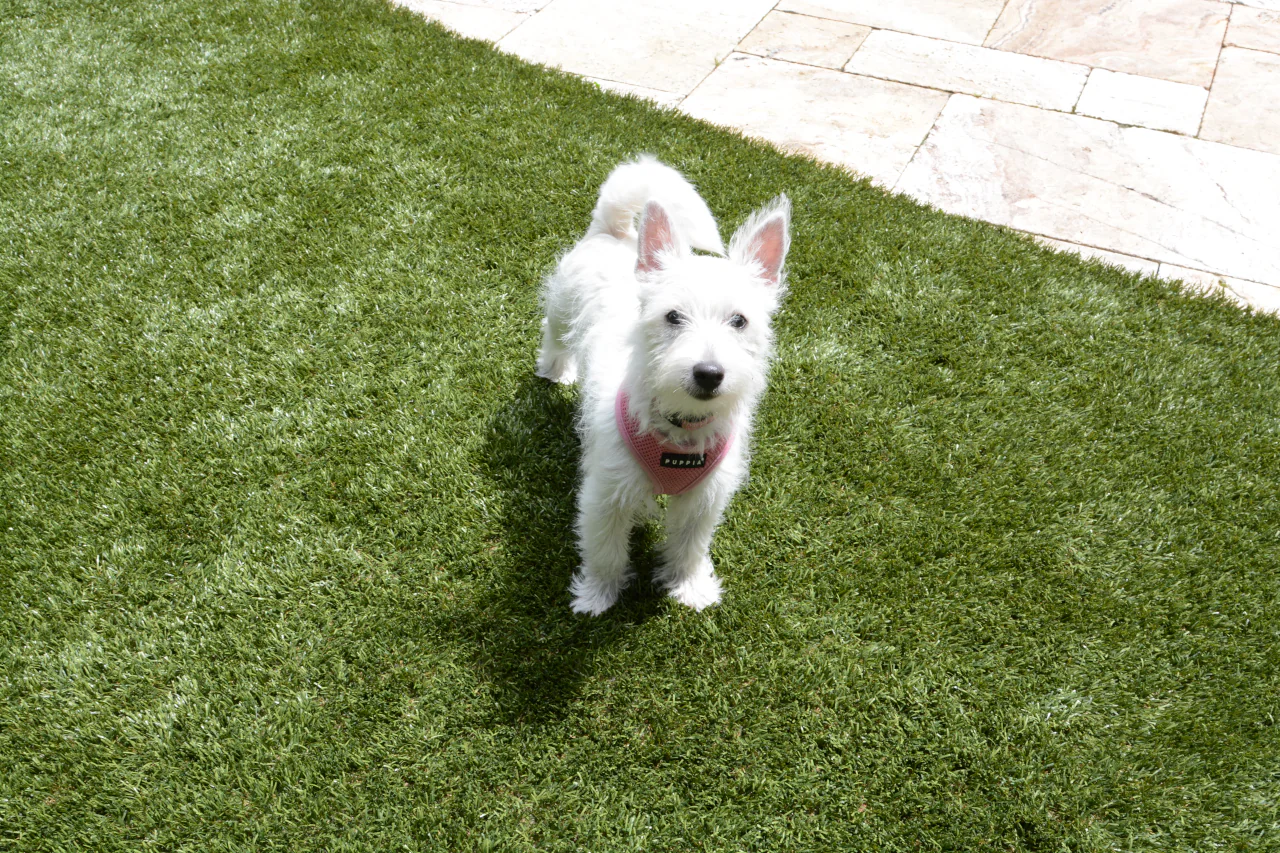
“Digging is my purpose.” — Your Dog
Q: My dog is basically a fur tornado. Can artificial turf survive that?
A: Absolutely… but only if you choose a surface actually made for dogs. The reality is: artificial turf for dogs is not the same material you see on miniature golf courses. We’re talking about dense turf fibers that won’t pull apart, reinforced backing that holds its position, and a drainage system that works fast.
So what does that mean for your high-energy dog? The turf bounces back after zoomies, stays durable when a big, energetic dog comes charging over it, and — most importantly — keeps your yard from ending up as that messy, muddy swamp you’re tired of managing.
“I pee where I please.” — Also Your Dog
Q: Does fake grass for dogs handle all that… enthusiasm
A: Yep. But you need the correct system. Good pet turf has a built-in drainage system (not just holes punched in the backing—real drainage engineering). Most also include antimicrobial layers to control odor buildup, which is a huge benefit if you’ve got more than one dog or a smaller yard.
When artificial turf installation is done right, urine drains through from the grass fibers pretty much immediately. Reduced odor, minimized bacteria, no surprise odor disasters when guests come over. Your dog gets to run free, and you no longer worry about potty spots.
“I specialize in holes. Can you stop me?”
Q: Can artificial grass prevent digging disasters?
A: Let’s be honest—no artificial grass can fully stop a persistent digger. If your pet is convinced there’s something exciting under that area of yard, they’re going to try. But a proper layered installation makes it much more difficult to dig through.
That includes a compacted base, locked-in edges, and optional barriers along the perimeter. Pair that with some enrichment toys and maybe a dog-safe digging zone, and you’ll see fewer holes in your lawn. Will it be 100% foolproof? Not entirely. Is it worth it? Absolutely.
“How do you keep this place from smelling like… well, me?”
Q: Maintenance — how much effort are we talking?
A: Less than expected. Regular waste removal is non-negotiable (just like natural lawns), and hosing down the turf every few days keeps things fresh. For spots that get a lot of traffic—or if you’ve got a dog who always uses one spot—an enzyme cleaner helps a lot.
Every once in a while, brushing the turf helps keep the grass looking full and comfortable for pets. Think of it like fluffing a pillow for your four-legged athlete. It’s not a huge time commitment, especially compared to reseeding bare patches or cleaning muddy floors.
“I need space. Big dogs, remember?”
Q: Is professional artificial turf installation worth it?
A: For large breeds with lots of energy, without a doubt. Professionals make sure the base is solid, drainage is efficient, borders stay secure, and infill suits pets. This helps prevent sagging, odor buildup, and digging shortcuts — overall, less stress for you, more play room for your pet.
When it’s installed correctly, you avoid sagging problems and those loose seams where a determined digger can cause trouble. DIY can work for light-use zones, but for dogs who play nonstop? Do yourself a favor and trust an experienced installer.